Pages

Sunday, October 23, 2016

Odds and Ends of October


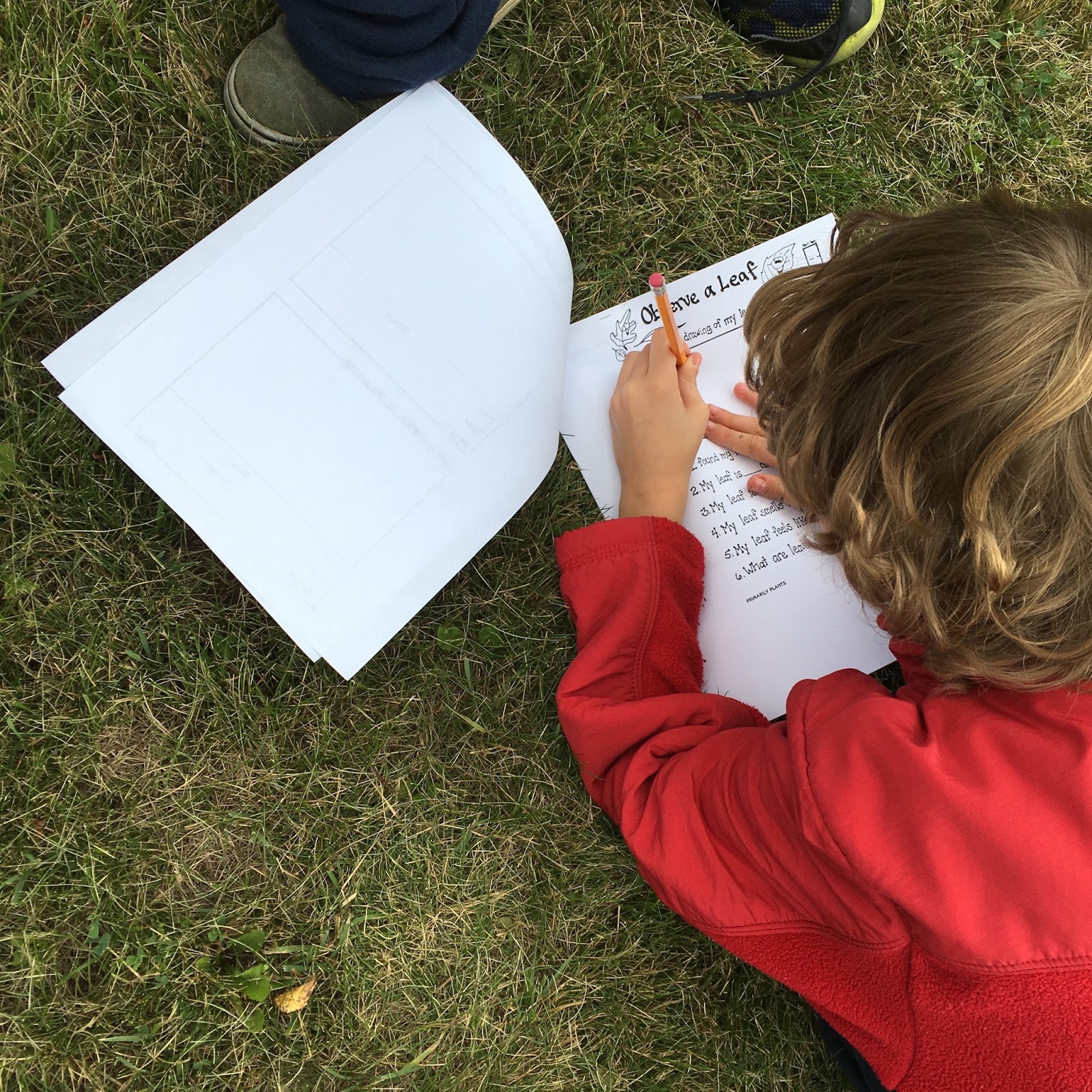
We just can't get enough of leaf rubbings.  What cool textures.  And a discussion about leaf color.  Why do they change from green to other fall colors?


Maple seeds, a.k.a. helpcopters, another way that seeds travel from place to place.  Oh, and they're super fun to toss up in the air for about 10 minutes.  


Stage 1 in making spider webs.  

An oldie but a goodie for first graders.  Repeated readings and controlled vocabulary ensure success for all.


Second graders are reading Marc Brown's Arthur books.  Marc hides his children's names in each book. It adds another level of humor and interest.  Can you find Tolon, Tucker, and Eliza in these illustrations?


We tally the number of school days each morning.  Thanks C.B.!


Every week or so we estimate how many pockets we have on our clothing that day.  Each child then takes a cube for each pocket.  Then we work cooperatively to stack the cubes in sticks of ten and leftover (remainder) ones.  

We are strong and kind citizens.  We demonstrate the four B's of behavior each day.  Lakewood Paw power!

Leaf Litter

We learned about a different kind of litter.  Not garbage litter, but leaf litter.  The kind that lays on ditches and on the forest floor.  In our Scholastic News magazines, we read about critters that live and hide in the leaf litter.  We also learned about animals that hunt creatures in the leaf litter (predator and prey).

In addition to learning science concepts, we are practicing the skill of using highlighters to focus on the main idea, details, and conclusion.  

Then we ventured outside to delve into our own leaf litter.  

We found lots of little critters of our own.
After about 20 minutes of exploration, the lesson dissolved into joyful giggles with leaf angels, leaf tossing, and hot dog rolling down the hill.

It was a perfect lesson on a perfect fall day.


Halloween Fun

Students had a hand-tickle when I brushed black paint on their hands.  They made handprints on a background and then they added their own spooky details.  We have been studying plot, main idea, and details.

This activity was a great lead-up to the concept of "setting". 

What better story starter than Frankenstein chasing a cat?

Or maybe a skeleton and Frankenstein taking their cat friend to a Halloween party?


Sunday, October 2, 2016

Adopt a Tree

Social Studies and Science blend concepts naturally in these lessons.  We adopted a maple tree that we can see from our classroom window.  We voted on names and decided (finally) on Thor Mable Syrup.  (LOL, no that's not a type-o. I thought they would have wanted "Maple" but it was definitely "Mable".)

Here is some of the learning:

What is adoption?  
Why do we care about trees?  
How do we use trees?  
How do we vote?   Why?
One person, one vote.
Voting is a right.
Voting gives us power in government.
Voting is a way to decide things peacefully. 
Voting does not mean what's popular.  It's an expression of one's opinion.
Voting, taking turns, being respectful of the opinions of others. -  Social Studies
Tally Marks - review of math concept and counting by 5's


I allowed one student to vote repeatedly.  Cries of outrage erupted.
 "That's not fair!"
A fabulous discussion followed regarding one person, one vote.

Gathering maple leaves for leaf rubbings.  Inspection of color, texture, and "veins".

Adoption means a commitment to love and care.


Super Seeds

We investigate the concepts of "new plants" all through the year.  This is the time for seed production.
  • How do seeds move from place to place? -wind, water, "hitch hikers", birds poop them out
  • What happens to seeds that land in areas which are too wet?  too dry?  too crowded?  too rocky?
  • Do all plants come from seeds?  What about cuttings?  Runners?
  • Why does nature make so many seeds?


One of our classmates from last year collected two zip-locs of lupine seeds for us, so we took advantage of the good weather and planted them. Thanks, C.K., you rock!


Stewardship is an important concept.  We'll leave the school grounds and the Nature Trail a better, more beautiful place.  


Insects on the Move

Outdoor education provides us an opportunity to do cross-curricular learning.  We grabbed our Nature Trail Journals and headed out into our School Forest.  This activity combined the learning targets of:

  • Studying insects....what makes them insects? are spiders insects?
  • Using scientific inquiry
  • Estimating
  • Counting, 1:1 correspondence, tallying, counting by 5's
  • Digging deeper... insects in the air, on plants, in the dirt, in the water
  • Do insects lay eggs?
  • Where do insects go in the winter?
  • What do insects eat?  What eats insects?
  • Insects are part of the food chain.
  • Are insects harmful or helpful?


For the Love of Learning 2016-17

As I am nearing the rule of 90, most people I know are asking if I'm retiring as soon as I can.   Upon reflection, I think to myself..."Hmmm... I've never had a boring day.  Every day is different.  I always have funny dinner conversation. I still get excited about setting up my classroom and seeing those bright, shiny faces on the first day of school and every day." 
I guess I'll know when I'm ready, but it's not yet.